

Cheese and Crackers
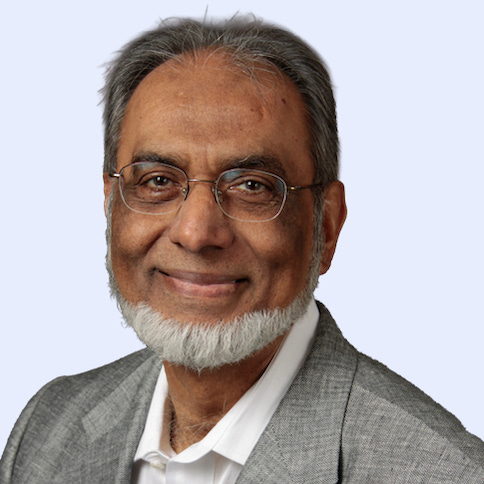
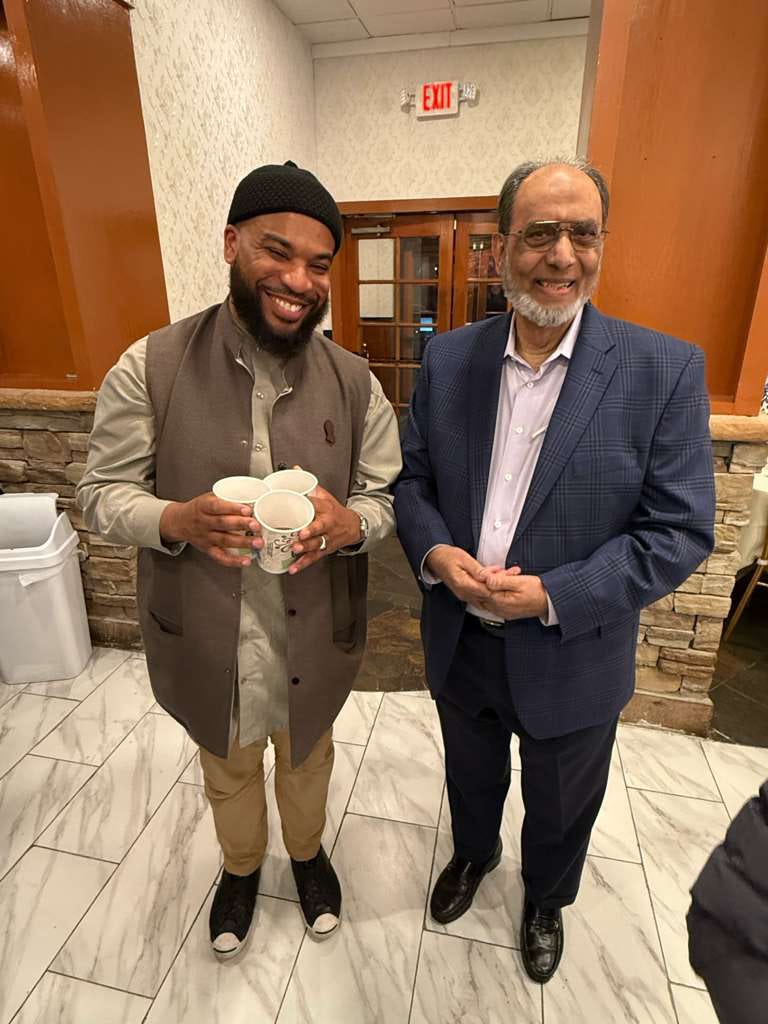
For the last two years, I borrowed a corner of Dr. Yaqub Mirza’s world without ever really belonging to it. Imam Mohamed Magid, Dr. Fatima Mirza (Dr. Yaqub’s daughter), and I used his conference room at Sterling Management weekly as a place to write. We came with drafts and questions, with paragraphs that refused to behave, and with the desire to be in each other’s suhba (companionship) in hopes of producing something beneficial.
Sterling Management is not a sentimental space. It does not perform warmth for you. There is no carpet softening your footsteps, and no coffee smell hovering in the air. It feels like what it is: a working office that expects work. The quiet there is practical, the kind that makes you hear little things—the click of a pen, the shift of a chair—because nothing else is trying to distract you.
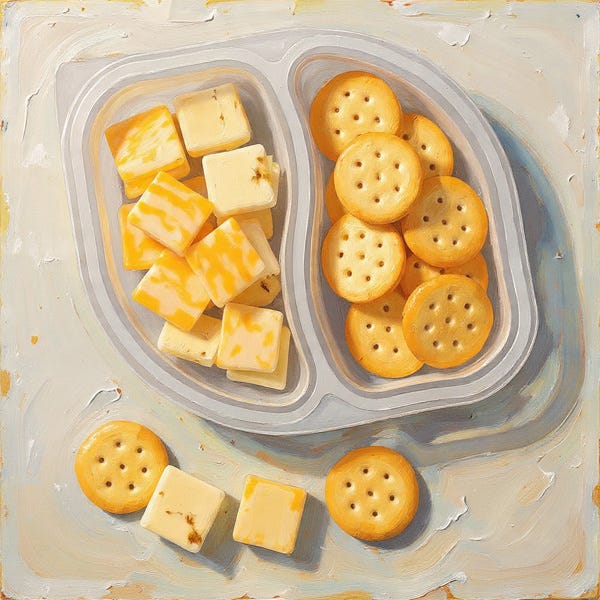
Every so often, Dr. Yaqub would stop by. He did not enter like someone checking on his property. He did not come to audit our progress or ask what we had produced. He would greet us, set something down for us—most often cheese and crackers snack packs—and move on as if the gesture were beneath mention.
Not elaborate, not expensive, not symbolic in any deliberate way. Just a token of generosity and hospitality, offered with the unselfconscious consistency of someone who has learned that care does not need an audience to be real. The gifts were never big, but they were frequent. And because they were frequent, they carried something bigger than their size: a quiet permission to keep going.
On December 3, 2025, in the company of loved ones Dr. Yaqub Mirza passed away. Inna lillahi wa inna ilayhi raji’un (Surely to Allah we belong and to Him we [all] shall return).
Because of work travel, I was not able to attend his janazah (funeral prayer) and I could not sit in the ‘azza (condolences) service. That absence has its own ache, because sometimes grief is not only losing someone—it is realizing how little control you have over the ways you show up for one another. I have never handled death neatly, and my first response is often a stillness in dissociation where emotions fade away with time.
I used to judge that delayed grief, as if the heart’s silence meant the heart was absent. I still do sometimes. But I am trying to meet it with a little more gentleness, because dissociation is not always indifference; sometimes it is simply how a person stays upright until they have the strength to feel. I do not always know what to make of my own responses, but I know I do not want this loss to pass through me without changing anything. Tawakkul (reliance upon Allah) is not a denial of what I missed; it is placing my regret and my limitations back in the hands of the One who knows my intention and my weakness better than I do. I could not be there physically, but I can still ask Allah to accept my dua (supplication), and to let whatever is sincere in this remembrance become of benefit rather than just words.
Mountains and Pegs
The Quran speaks about mountains with a simplicity that hides a deep lesson: “Have We not made the earth as a resting place, and the mountains as pegs?”1 Mountains, in this image, are not scenery. They are stability made visible—massive, unmoving, and uninterested in our attention. Their permanence trains us into forgetfulness; we live as if what holds us will always hold. Only when we picture the land without them do we understand how much of our calm was borrowed from something that simply stood there, quietly doing its work.
Communities have mountains too. They are not always the most visible people, but they are the stabilizers: those who quietly absorb pressure, those who build and maintain what others stand on. When they are present, the community feels firm without necessarily knowing why. When they are gone, we feel the ground shift under conversations that used to feel steady.
A prophetic warning returns to me in seasons like this. The Messenger of Allah ﷺ said, “Allah does not remove knowledge by snatching it from people, but by taking the lives of those who carry it … then people take ignorant leaders and go astray.2 We usually hear this pertaining to scholars, and it is true—that is what the Hadith is referencing. But I also believe we can expand the warning to other forms of knowledge that keep communities stable: the knowledge of how to build, govern, plan for succession, mentor, and keep an institution from becoming a stage.
When a community loses a “mountain,” it loses more than a person. It loses a certain kind of moral and structural steadiness. And then everyone learns, in the quiet that follows, how much they had been depending—because the place that once held them has become a void.
Signs of a Mountain
If mountains are “pegs” in the earth, then the question for a community is painfully simple: who are the people who function as pegs, and how do we recognize them before they are gone? The answer is not always found in the spotlight. Often it is found in what quietly becomes easier around a person: burdens lifted, pathways clarified, institutions steadied, ethical life made more livable for ordinary people who are just trying to worship Allah without losing their footing.
One way Dr. Yaqub’s work touched the community was through ethical, faith-conscious investing. I do not say that to turn this into a finance discussion, but because money is one of the most powerful anxieties in modern life. Many of us carry a quiet fear that financial responsibility requires moral compromise, that participating in the world demands violating what Allah has prohibited. In that space, even a single lawful pathway can be a mercy—not because it makes life simple, but because it makes obedience possible without constant spiritual angst.
Mountains do not prove their value in a moment; they prove it over time. That is what makes the date more than a fact. The Amana Income Fund began operations on June 23, 1986, and Dr. Yaqub is named among its founding trustees.3 The significance is not merely that it existed—it is that he was part of laying that foundation early, then letting it quietly serve people he might never meet. That is stabilizing work: building lawful pathways that reduce spiritual anxiety, not by speeches, but by creating options that help families remain upright.
Another sign of a mountain is how it treats knowledge—not as decoration, but as something worth housing and protecting. George Mason University announced a three-million-dollar gift through the Mirza Family Foundation to rename and strengthen its Center for Global Islamic Studies in honor of Abdul Hamid AbuSulayman.4 Shenandoah University similarly reported a Mirza Family Foundation gift establishing the Mirza-Barzinji Fund for Global Virtual Learning, emphasizing the aim of perpetuating educational benefit beyond a single moment or generation.5 At Shenandoah, Dr. Yaqub also established the Center for Islam in the Contemporary World—another way of turning resources into a durable home for learning and public understanding.6
You do not have to live on a campus to understand what this means: it is someone treating the pursuit of understanding as an act worth sustaining—building places where Muslim life and thought can be studied, taught, and engaged with seriousness rather than caricature.
But the point of gathering these facts is not to admire a résumé, it is to notice the shape of a life and ask what it teaches the living. Most of us will never build at that scale, and we do not need to. The question is not whether we can reproduce his reach; it is whether we can reproduce his orientation: a willingness to reduce other people’s burden, to make ethical life more accessible, to invest in knowledge that outlives personal influence, to strengthen the Ummah (Muslim community) in ways that remain sturdy when personalities change.
And perhaps the clearest sign of all is this: he did not seem to need his name hovering over what he built. Even assembling these public markers requires some digging—following institutional announcements, reading annual reports, tracing the quiet footprints that do not announce themselves. That is not a weakness in his legacy; it is a testimony to it. In a time when so much service is packaged to be seen, he served in ways that could easily go unnoticed—until the day the community feels the gap and realizes how much was being held.
When you gather these signs, you begin to recognize what the community often overlooks: not just builders of institutions, but stabilizers of atmosphere. The ones who keep adab intact, who keep warmth consistent, who make the Ummah feel like home even when the familiar voices are not in the room. That presence deserves to be named—because it is also something we can learn to carry.
The Stabilizers
A stabilizer is not simply someone who “helps.” A stabilizer is someone whose presence makes the community feel like itself. Their gift is not only what they do, but what they preserve: the tone of a place, the tenderness of its norms, the quiet expectations that keep people from becoming harsh with one another. When they are present, the community stays familiar. When they are absent, something subtle changes—like a room losing heat.
We tend to speak about leadership as if it only happens out front, as if the most important work is what is said into a microphone, written into a vision statement, or performed by boards and executives. But much of what shapes a community happens when the known voices are not there. It happens in the hallway and at the door. It happens in who greets people without judging them. It happens in who notices the newcomer standing alone. It happens in who keeps the standard of adab (decorum) when tension rises—who lowers the volume, who refuses gossip, who turns conflict into a conversation instead of a fracture.
Stabilizers keep the community’s “normal” healthy. They protect the difference between a masjid that is busy and a masjid that is loving. They hold the social fabric in place with consistent, small acts: showing up, remembering names, quietly checking on someone, doing a task that no one will praise, absorbing stress without passing it on to others. They are the people who make faith feel possible on an ordinary day, not because they teach new ideas, but because they embody reliability.7
When I think back to Tuesday mornings at Sterling Management, I realize Dr. Yaqub’s cheese and crackers were not only generosity, they were part of that stabilizing presence. He did not need to sit with us to “lead” us. He did not need to insert himself into the work to make his presence felt. He simply reinforced a norm: people doing something difficult deserve to be treated with care. A small snack pack, placed down without ceremony, can be a quiet form of culture-setting. It teaches you what kind of space this is. It teaches you what kind of person you are standing near.
The more I sit with what “mountains” really are, the more I realize they aren’t measured by what they build, but by what they keep steady. Most of us will never establish a trust, endow a center, or build something large enough to carry our names. But everyone can become a stabilizer. Everyone can become the kind of presence that keeps the Ummah steady when others are absent. Everyone can contribute to a culture where the default is mercy, not suspicion; generosity, not coldness; patience, not impatience; dignity, not humiliation. Everyone can love and serve.
When a stabilizer is removed, we feel more than sadness. We feel exposure. Not because the community collapses immediately, but because we realize how much of our comfort came from someone else’s consistency. We begin to notice what was being held together—what was being softened, what was being prevented, what was being quietly maintained. And that discovery leaves a question hanging in the air, not meant to shame us, but to mature us: were we only receiving stability, or were we learning how to offer it?
That question is where the ground truly begins to shift—not outside of us, but within us.

When the Ground Shifts
When a mountain disappears, what rises first is not always grief in its pure form. Often it is something more tangled: a sudden exposure, as if the community has been standing in a sheltered place without realizing the wind was being held back. We feel it as restlessness in the body, as a tightening in the chest, as questions that arrive without invitation. Some of those questions are about the future, but many of them are about the present: Who was holding this together? What was I depending on without noticing?
The truth is, loss has a way of revealing our attachments. It shows us where we placed our confidence, where we outsourced our steadiness, where we assumed someone else would always be there to carry what we did not want to carry. Sometimes we discover that our love for a “mountain” was also a kind of dependence on a “mountain,” and we feel ashamed of that discovery. But shame is not always the right teacher. Sometimes the right teacher is honesty: to admit that we leaned too heavily on what Allah had only given us temporarily, and to ask to be returned—gently—back to the One who was never temporary.
This is why the verse about Musa (‘alayhi salam—peace be upon him) stays with me. When Musa asked to see Allah, he was directed to look at the mountain: “if it remained firm, then he would see.” But when Allah manifested to the mountain, it crumbled, and Musa collapsed.8 The mountain did not crumble because it was weak; it crumbled because it was created. Even mountains—literal ones—are not built to carry what only Allah can carry. That verse does not shame us for seeking stability; it reorders our hearts. It reminds us that the One we are meant to trust is not the sign, but the One who placed the sign.
And still, we do not pretend this feels simple. Some of us feel that the education was taken too early, as if the classroom door closed mid-lesson and we are left holding notes we did not finish reviewing. But perhaps that is part of the test: whether we were only consuming the steadiness of our mountains, or actually learning how steadiness is formed. What we received from them—quiet responsibility, ethical clarity, patience with unglamorous work—cannot remain admiration. It has to become an embodiment. Otherwise, the mountain’s absence becomes only a wound, not a charge.
So this moment invites something difficult and dignifying: to take what we learned and build it into ourselves. Sabr (patient perseverance) and tawakkul have to move from vocabulary to posture—firmness without panic, effort without grasping, trust without passivity. The mountain is gone, but the lesson does not have to be gone with it—if we are willing to let the void teach us where our roots still need to grow.
How to Carry the Legacy Forward
Honoring a “mountain” does not mean turning the person into a myth. It means learning from the kind of life they lived, and then trying—quietly, steadily—to carry its best qualities forward.
The Prophet Muhammad ﷺ said that when a person dies, their deeds end except for three: “Sadaqah jariyah (ongoing charity), beneficial knowledge, and a righteous child who prays for them.”9 The hadith is comfort, but it is also direction. It tells us what continues, and it tells us what kinds of lives are worth building.
So what do we do, in a community, when the people who built quietly are no longer here? We begin, as Islam teaches us to begin, with what is within our reach and within our hearts.
Prayer and presence. Begin with dua, and make it specific. Ask Allah to forgive Dr. Yaqub, to expand his grave with light, and to accept the good he placed into the world. Then add presence to prayer: check on the family (particularly for those who have relationships with them), support them when the crowd thins, remember them when we no longer “have to.”
Furthermore, we must pray for ourselves and the Ummah—that Allah bless us to be who strive for excellence and sincere servants to the Ummah of Prophet Muhammad ﷺ. “Know that if the entire creation were to gather together to do something to benefit you- you would never get any benefit except that Allah had written for you. And if they were to gather to do something to harm you- you would never be harmed except that Allah had written for you.”10
Ethical clarity. Build ethical clarity in our own life. A community is steadier when its members are careful with their earnings, humble with their influence, and sincere in their service. Ethical discipline is not private self-improvement; it is community infrastructure. It makes presence more trustworthy, and it makes leadership less dangerous.
Mentorship. Mentor one person into steadiness. Not as a program. Not as a performance. One person you can take seriously, consistently. Teach them adab, patience, and the quiet dignity of behind-the-scenes service. This is slow, unglamorous work, but it is how “mountains” multiply.
Sadaqah jariyah. Choose one form of sadaqah jariyah and commit steadily. If you can give money, give it in a way that continues: scholarships, learning spaces, programs that protect knowledge and dignity. If you cannot give money, give time, skill, and reliability. The goal is not a dramatic gesture; the goal is a long pattern of benefit.
None of these actions will make grief disappear. But they will keep grief from turning into chaos. They will turn loss into a kind of responsibility. They will allow the community’s ground to become firm again, not because the mountain returned, but because Allah granted new pegs—through the steady service of many.

A Closing That Does Not Pretend
About a week or so after Dr. Yaqub’s passing, we returned to Sterling Management. The building was doing what buildings always do: lights on, doors opening, the ordinary rhythm of work continuing as it had before. That normalcy can feel like a kind of shock when someone has just left the world. Grief does not always arrive as tears; sometimes it arrives as disorientation, as the uneasy feeling that the world is moving forward too smoothly while your heart is still trying to catch up.
Before we began writing, Imam Magid asked for Dr. Yaqub’s office unlocked and the staff to gather inside. It was left exactly as he had left it. The room held that particular quiet that only comes when someone is deeply missed: not dramatic, not staged, just heavy with presence through absence. Imam Magid made a dua for him—nothing long, nothing performative—just sincere and heartfelt, the way a person turns to Allah when words are not meant to impress anyone, only to reach the One who hears what we cannot fully say.
As we were leaving, someone opened one of the boxes on the floor and offered us seasonal chocolate-covered almonds. He told us, “Dr. Yaqub loved giving gifts and would have wanted you all to take one.” And it felt, in that small moment, like a final lesson delivered in his own language: generosity without ceremony, warmth without spotlight, a quiet way of saying that even after someone returns to Allah, their instinct for khayr (goodness) can still reach the people they leave behind.
“Inna lillahi wa inna ilayhi rajiʿun.”11 The verse does not cancel grief, it frames it. It reminds us that people belong to Allah before they belong to us, and that returning to Allah is not a tragedy for the believer, even if it is painful for the living.
What a community does after losing a mountain reveals whether it was only admiring steadiness, or learning how to become steady. The verse we recite in grief is not merely a way to cope; it is a way to locate ourselves. If we belong to Allah, then our lives are not meant to be spent drifting from moment to moment. They are meant to be planted—rooted enough that others can lean on what we build long after we are gone. That is where sabr becomes more than endurance: it becomes remaining in place until your roots take. That is where tawakkul becomes more than comfort: it becomes the courage to build without grasping, to serve without needing to control how the story ends, trusting Allah with outcomes we cannot guarantee. We must plant ourselves in the Ummah through consistent worship, sincere responsibility (whether public or private), and durable service, so that when we return to Allah, something still stands that makes obedience easier for those who remain.
“So truly with hardship comes ease” is not permission to wait for relief; it is a promise that firmness is never wasted.12
Allah have mercy on Dr. Yaqub Mirza. Forgive him and elevate him. Accept from him the good he placed into the world, and make it sadaqah jariyah that continues to benefit people after him. Comfort his family and all who loved him, and grant them sabr that softens rather than hardens.
Allah protect our communities from the chaos that can follow loss. Do not let ego and ignorance fill the spaces left by the righteous. Make us people who build sincerely and consistently. Make us pegs in the earth, stable enough that others can stand, and humble enough that we do not need anyone to know our names.
Quran 78:6–7.
Amana Mutual Funds Trust, Annual Report May 31, 2021 (unaudited) (Bellingham, Washington: Saturna Capital Corporation, July 23, 2021), 4, accessed January 14, 2026, https://www.saturna.com/sites/saturna.com/files/files/Amana_Annual-Report.pdf.
George Mason University, “Gift to Rename Center for Global Islamic Studies Honors AbuSulayman’s Advocacy,” George Mason University News, November 9, 2022, accessed January 14, 2026, https://www.gmu.edu/news/2022-11/gift-rename-center-global-islamic-studies-honors-abusulaymans-advocacy.
Shenandoah University, “Gift Perpetuates Barzinji Institute’s Work,” Shenandoah University Blog, October 5, 2023, accessed January 14, 2026, https://www.su.edu/blog/2023/10/05/gift-perpetuates-barzinji-institutes-work/.
Center for Islam in the Contemporary World, “President: Dr. M. Yaqub Mirza,” accessed January 21, https://www.contemporaryislam.org/president.html.
When I think of “the stabilizers,” I often think first of women—not because women are the only ones who serve in the background, but because so much of their labor is culturally expected, frequently overlooked, and treated as ordinary even when it is holding the community together.
Quran 7:143.
Quran 2:156.
Quran 94:5–6.