

This is the first time I’ve recorded a voiceover for one of my articles. I would love to hear back from you, whether or not you appreciated it or it made a difference. If you have the time, please take the poll at the end. Thank you, and Allah bless you!
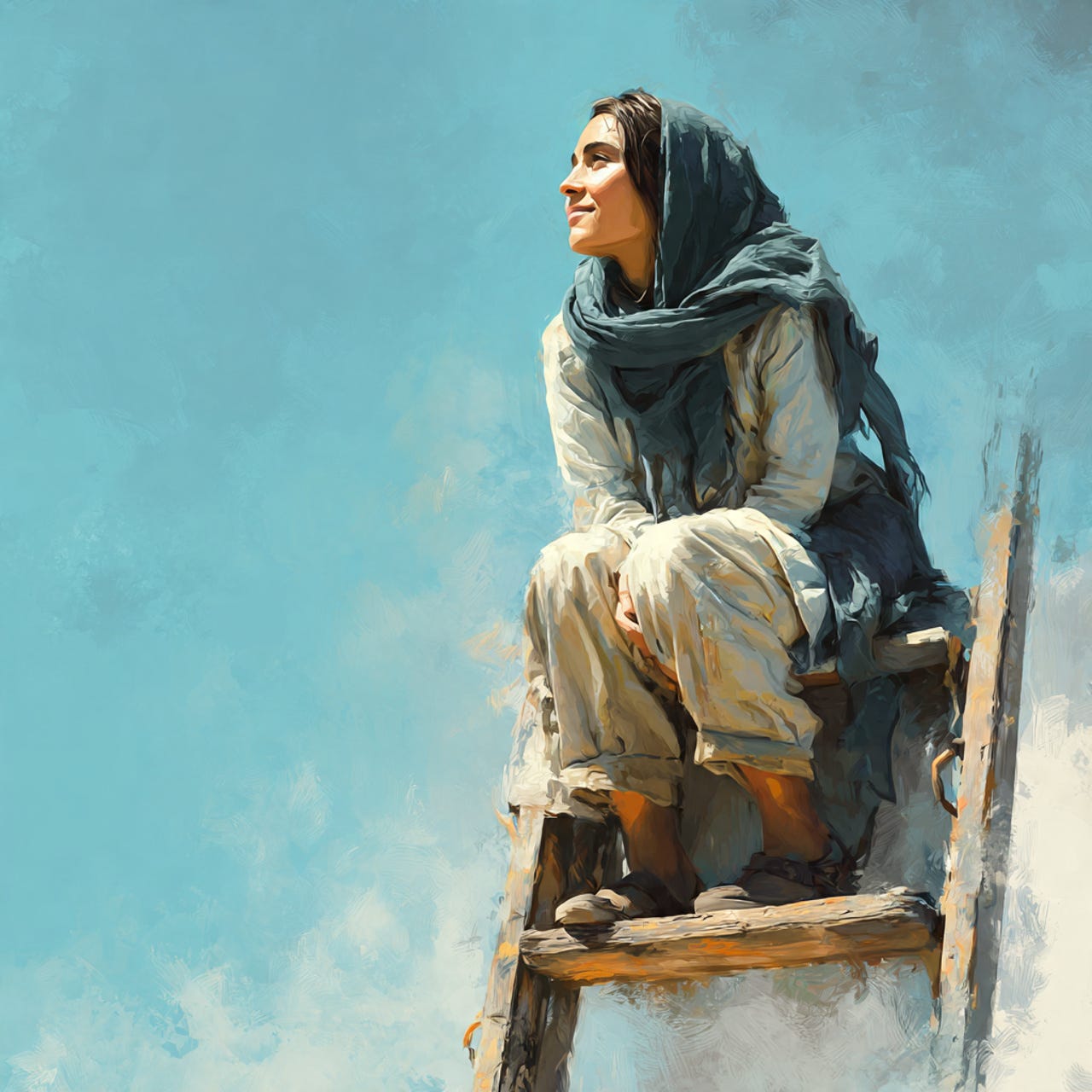
For most of my life, I like things to be as simple and clean as possible. It’s partly a Merchant thing, but for me it removes ambiguities and helps ease my ability to keep my intentions ethically sound. My relationship with people is no different. It’s simple: I am here to serve. Not in the sentimental way people say “service” when they mean volunteering once a year. I mean the deeper instinct that makes us show up for people without doing the invisible math of what they can give us in return. I’ve always wanted my relationships to stay in that register—human, unranked, unstrategic.
And that is part of why money has always made me uneasy.
I don’t think it’s because I believe money is inherently evil. It’s because money changes the air. It arrives and suddenly our attention has something else to cling to. It makes us notice things we were proud we didn’t notice. It introduces subtle questions we didn’t want to ask: Who matters? Who has access? Who can open doors? Who can close them? Money doesn’t have to be spoken aloud for the room to begin orbiting around it.
I used to tell myself that protecting intention meant keeping money out of the equation. If I stayed far enough from it, I wouldn’t become the kind of person who treats others like resources. If I never had to ask anyone for anything, I wouldn’t be tempted to flatter, to perform, to tilt my dignity in exchange for support. In my mind, sincerity was a kind of distance.
This came up recently in a conversation with my friend and boss, Aly Orady. It wasn’t one of those dramatic conversations people quote later as a turning point. It was ordinary, and maybe that’s why it stayed with me. I was talking about that familiar anxiety—about how money can contaminate good work, how it can warp relationships that were meant to be sincere, how quickly the heart begins to bend toward those who have influence.
Aly listened and then reminded me of a dua (supplication) of the Prophet Muhammad ﷺ, “O Allah! Honor Islam through the most dear of these two men to You: AbuJahl or Umar b. Al-Khattab.”1
I had heard it before. I had even loved the story of Umar b. Al-Khattab (Allah be pleased with him)—his strength, his transformation, the way truth turned him from a danger into a fortress. But hearing that supplication juxtaposed to my fear about wealth and influence did something to me. It made the question less sentimental and more honest.
That supplication is not romantic. It doesn’t ask Allah to strengthen the faith through someone gentle and hidden. It specifically asks Allah to strengthen Islam through men who represented consequence in their society—names that carried weight in the mouths of others. It quietly admits what we often try to deny: that strength exists in the world, that influence exists, that public power shapes outcomes, and that the faith is not embarrassed by any of that. Islam doesn’t pretend some people can’t shift the atmosphere of a room; it asks Allah to redirect that power toward good.
What unsettled me was realizing that I was sometimes refusing to let Allah use means I didn’t approve of. I was shrinking sincerity into something small and controllable—treating the real mechanics of provision, networks, and capacity as spiritually suspicious—because then I could stay untested.
Maybe my instinct wasn’t always a moral instinct. Maybe it was a control instinct wearing the clothing of devotion. That doesn’t mean money is innocent. It means my fear of money wasn’t necessarily proof of sincerity. Sometimes fear is just fear, and sometimes the heart hides inside it.
What follows isn’t a manifesto against wealth, and it isn’t a defense of it either. It’s closer to a confession about the way our hearts keep reaching for certainty, even in places where Allah seems to invite us into something more uncomfortable: trust.
“Verily Allah does not look to your faces and your wealth, but He looks to your heart and to your deeds.”2
–Prophet Muhammad ﷺ
Imaginary Ladders
We can live in a culture that prides itself on rejecting hierarchy and still find ourselves quietly arranging people into ranks. We do it in ways that feel too subtle to confess. We tell ourselves it’s just “being realistic,” just “reading the room,” just “understanding how things work.” Then we catch ourselves—later, when the day is quiet—realizing how much of our energy was spent trying not to look small.
The hierarchy ladders are rarely announced. They’re built from glances, introductions, whose messages we return quickly, whose disappointment we fear, whose approval we secretly interpret as safety. Money is one rung, but it’s not the only one. Influence is a rung. Ease is a rung. Being “in the right circles” is a rung. Even religious respectability can become a rung, the kind of rank we pretend is piety.
What makes them “imaginary” isn’t that they have no consequences. It’s that they’re internal. Once the mind assigns rank, we start living as if we’re under review—restless in rooms that haven’t actually threatened us, rehearsing sentences, softening truth, shrinking ourselves just to stay near whatever we’ve decided is “above.”
That’s why a small moment from the Companions, may Allah be pleased with them, feels so alive. Carrying a very human worry, they came to the Prophet ﷺ, and said “The wealthy have taken the rewards; they pray as we pray, they fast as we fast, but they give charity from their extra wealth.”3
What comes through in this narration isn’t envy. It’s longing—and the fear of being left behind by circumstances they can’t change. Beneath that is an assumption that still lives in us: that the door of Allah’s pleasure might be built in the shape of what the world calls “capacity.”
The Prophet’s response ﷺ holds the reality of wealth without surrendering to it. Money can open doors of good, yes, but it is not the only doorway. He points them toward a different kind of nearness—dhikr (remembrance), tasbih (glorification), and small acts that keep the heart full even when the hands are light.²
That hadith doesn’t remove the ladder from the world, but it removes the ladder from being a final judgment. It loosens the way our hearts obsess over a single rung and forget the vastness of Allah’s mercy. It is a re-education of sight.

Different Gifts, Equal Tests
That dua—the one that names AbuJahl and Umar—reframed something for me. It taught me a principle I keep returning to: having wealth is equal an amanah (trust) and test as it is for someone who doesn’t have it, but has different gifts.
Equal tests aren’t equal experiences. Both are equal in weight. Neither abundance nor scarcity is a spiritual shortcut—both can raise us (in closeness to God) and both can ruin us, but both reveal what we’re actually clinging to.
We’re tempted to turn circumstances into verdicts because verdicts feel clean: “They have more because Allah loves them more,” “We have less because we’re being punished,” or “If we were given what they were given, we would finally be safe.” But Allah interrupts that whole way of reading the world with a verse that refuses our ladders, “Surley the most noble of you in the sight of Allah has the most taqwa (God-consciousness) [i.e., most righteous].”4
If honor is taqwa, then wealth is not honor. Lack is not humiliation. Influence is not rank, and being unknown is not failure. These are arzaq (plural of rizq, i.e., provisions or portions) and arzaq come with responsibilities that look different from person to person. Wealth carries its own temptations: entitlement that impedes gratitude, generosity that desires applause, humility that cracks under praise. Scarcity has its pressures too: patience that can sour into bitterness, contentment that can slip toward despair, compromises we swear we’d never make if we felt safe.
And then there are gifts we rarely name because they feel ordinary until they disappear: health, time, emotional steadiness, stable family, a reliable community, the ability to think beyond survival. Those gifts test us too. They can become doors of worship and service, or they can become the quiet reasons we forget Allah.
When we accept that gifts are tests, comparison changes shape. It becomes less about who is ahead and more about what we are being asked to carry. It becomes harder to romanticize another person’s rizq, because we don’t know what it costs them privately. It becomes harder to despise our own rizq, because we start to suspect it was given with wisdom, even if we can’t see the wisdom yet.

The First Time I Heard It
The phrase “it isn’t my money” first reached me through someone who actually had money, MashaAllah.
A sister was speaking about her family’s wealth, and what stayed with me wasn’t the number or the scale (because she never mentioned it). It was the posture. She wasn’t talking about lifestyle or prestige, but deployment—where to put wealth, how to move it toward something that matters, and how to carry it without letting it carry her. Then she said, with a calmness that felt almost unsettling: “It’s not my money.”
It didn’t sound like a slogan. It sounded like a fact she had accepted, the way we accept that our bodies belong to Allah, or that our time is already being spent whether we notice it or not. The wealth was in her hands, but not in the way our egos want things to be “ours.” It was a trust.
If “it isn’t my money” is true, then money becomes rizq. Provision is never a final verdict; it’s an amanah—a trust with rights attached, and accountability built in. That means we can plan and work without obsessing over outcomes, give without feeling diminished, and receive help without shame, because Allah provides through means.
“Do not make the dunya (worldly life) our greatest concern, nor the limit of our knowledge.”5
–Prophet Muhammad ﷺ
Zuhd + Detachment
This is where the tradition gives us a word for what we’ve been circling. We’ve been talking about money changing the air, about ladders we pretend we don’t see, about the quiet panic of needing to stay untempted. Underneath all of it is the same longing: to hold the dunya without being held by it. That inner freedom has a name in our tradition—zuhd—and it’s deeper than “having nothing.” It’s about not being owned.
Imam Al-Ghazali (d. 505/1111) describes zuhd with a simplicity that leaves us nowhere to hide: it is “the turning of desire away from a thing toward what is better than it.” He isn’t saying desire disappears, rather it gets re-aimed. Our hearts will always lean toward something—some source of security, some promise of “I’ll be okay”—and zuhd is when that leaning turns away from what is temporary toward what is actually better: Allah’s pleasure, and what remains.6
When we hear it like that, zuhd stops sounding like retreat and starts sounding like honesty. It’s not that we stop caring; it’s that we stop asking the dunya to be our proof of worth, our guarantee of safety, our certificate of being loved. We learn—slowly, imperfectly—to want Allah’s pleasure more than we want the comfort of being ahead, and to want acceptance more than we want applause.
But that definition also forces us to admit where desire hides. Sometimes it hides in obvious things—money, comfort, attention. Sometimes it hides in more “religious” disguises: the desire to be seen as detached, the desire to be known as sincere, the desire to feel above temptation.
Detachment can become a badge we quietly worship. We can take pride in refusing wealth, build ladders out of renunciation, and still insist we hate ladders. Even “we don’t care” can become a performance—another way of asking to be noticed.
That brings us back to the “cleanliness” I love. Cleanliness can be a mercy—clarity, ethical steadiness, vigilance. But it can also become a hiding place. A way to stay untested, because tests introduce ambiguity, and ambiguity threatens my self-image.
The prophetic dua we started with doesn’t let us stay there. It suggests Allah can strengthen His religion through strength, through capacity, through influence—so long as the heart remembers who those gifts belong to. That doesn’t excuse the danger of money. It simply refuses the idea that “clean” always means “far away.”
What Owns Us
If there is one practical way to locate our attachments without theatrics, it is to watch our reactions.
Even the right sentences don’t guarantee freedom. We can talk about trust and still panic when our plans collapse. We can praise sincerity and still bend our dignity in rooms where influence is present. We can admire zuhd and still crave the reputation of being detached.
A clearer measure often shows itself when we ask two questions: What are we willing to sacrifice to get what we want? What do we become when what we have is threatened—or taken?
One measure is what we’re willing to trade for what we want—prayer, honesty, gentleness, integrity. Another is what happens inside us when a gift is threatened. Loss has a way of revealing what we didn’t know we had turned into identity.
This isn’t meant to shame us. It’s meant as an inventory—quiet, private, and sometimes painful—the kind we do at night, when we’ve finally stopped performing.
I don’t think the goal is to become people who feel nothing. Islam doesn’t ask us to pretend loss doesn’t hurt, or that inequality doesn’t press on the chest. The goal feels closer to steadiness: returning what we have back to Allah in the heart, so we can hold it without clinging—and if we lose it, not letting that loss harden into suspicion of Allah, contempt for people, or disgust with ourselves.
And then, underneath all the analysis, a simpler question waits: what does it look like to carry our portion well?
We don’t get to choose our trusts. We only get to carry them. Some of us are entrusted with wealth that can move things in the world. Some of us are entrusted with gifts that never trend: steadiness, patience, the ability to show up, the ability to listen without turning someone’s pain into a story about ourselves. Some of us are entrusted with leadership, or sharp thinking, or the kind of personality that makes rooms warmer. Some of us are entrusted with caregiving, with obscurity, with doing the same faithful acts so repeatedly that nobody sees them as heroic anymore. The test isn’t whether the trust looks glamorous. The test is whether we treat it like a trust at all—whether we handle it with responsibility, with gratitude, with restraint, with excellence, even when no one is watching and nothing about it makes us feel “ahead.”
Sometimes “it isn’t my money” feels like relief. It returns everything to the One who owns it anyway, and it lightens the tightness that comes from acting like we were meant to control outcomes. Other times, it feels like standing at the edge of uncertainty and remembering that uncertainty was always part of faith. Either way, the sentence keeps doing the same quiet work: loosening the ladder before we build our lives on it.
O Allah, make us faithful stewards of what You have entrusted to us with—our money, our time, our health, our knowledge, our relationships, our influence, our obscurity. Let us care for these gifts with excellence whether they are praised or ignored, whether they look like leadership or quiet maintenance, whether they come with applause or with nothing at all. “Do not make the dunya our greatest concern, nor the limit of our knowledge.” Make our work sincere without making us arrogant about sincerity. Let us remember what we keep forgetting: we were never owners; we are merely caretakers, and only for a while.
Ultimately, with Allah is success.
Quran 49:13.
AbuHamid Al-Ghazali, Iḥyāʾ ʿUlūm al-Dīn (The Revival of the Religious Sciences), second edition, first printing (Jeddah: Dar al-Minhaj, 1440 AH [2019]), vol. 4, 232.
Wow! Just wow! So many amazing insights in this post. Thank you for writing this!
It’s not my money.
That’s an interesting phrase.
Sorta reminds me of a poem my gramps used to quote by Iqbal.
If I’m remembering right, the Urdu went something a long the lines of:
Shukr ker rahman ka,
Badil naho mehman sai,
Wo upna rizq khata hai,
Teray dusterkhan sai.
Which translate to something along the lines of:
Be thankful to the most merciful,
don’t be disheartened by guests,
they eat their own provision (provided by Allah),
from your table
…not quite the same impact in English, but it did sorta change how I view things in that regard.
But yeah! Loved the article. It focused on a question that I’m pretty sure a lot of folks have thought about in one way or another. The answer too… for that matter, was an interesting one. Like you said, I’d heard the Hadith before, but I’d never quite considered it in that context. Makes you wonder what other nuggets we’ve absorbed over the years could prove fruitful in a different context…
Can’t wait to see what else you have in store!